Monotropa uniflora, The Ghost Pipe Flower, The Indian Pipe Plant
by Michael W. Brandon; (July 11, 2023), (ArtifactMuse:2023).
It has been fairly recent that I began exploring the diversity of edible and medicinal plants that Pennsylvania(1) has to offer. While this article is about the Monotropa uniflora, also known locally in USA as the ‘Ghost Pipe Flower’ or the ‘Indian Pipe Plant’(2), there is another important topic to introduce. Ethnobotany(3) is the study of traditional or native plants in a specific region of communities, or of cultures. What are the plants? Where to find them? How do the individuals use them for food, ceremony and/or medicine? In the case of Monotropa uniflora, I found out about it quite by accident and was amazed at what previous ethnobotanist of the past and present had documented from their ethnographic and ethnobotanic fieldwork.
Originally stumbling almost upon Monotropa uniflora while searching for Morels, Chanterelles, Reishi, and Oyster mushrooms in the forest behind my house. I like to take pictures and identify new things, usually later after returning home. When I first spotted the Monotropa uniflora, I thought, “What an interesting ‘flower-like’ mushroom!” It grows from the ground and almost looks like a flower, but was white and translucent in appearance, other sources mention pink, reddish, and/or black specks may also exist.(4) It is a very short flower, less than one foot tall, often barely six inches tall, and often grows in small tight clusters. I didn’t realize it in the early season this time, but later when I harvested a few that were more mature, they also have many seeds that collect in the middle of the ‘petals’, as you might expect from a flower.
The areas that I have found Monotropa uniflora have all been on ridge or gully slopes. I believe this is due to its unique symbiotic relationship with mycorrhizal fungi, “usually a russula or lactarius mushroom” and surrounding trees.(5) This allows it to have no need for chlorophyll to survive and thrive which is why they have so little color they basically look like a milky clear translucent whitish color. I would say sometimes they look almost clear. When they die and are dried they turn a dark purplish black.)
The following excerpt is from (www.wsharing.com/WSphotoIndianPipe.htm):
“The Smoky Mountains: ‘Before selfishness came into the world, which was a long time ago, the Cherokee happily shared the same hunting and fishing lands with their neighbors. However, everything changed when selfishness arrived. The men began to quarrel with their neighbors.
The Cherokee began fighting with a tribe from the east and would not share the hunting area. The chiefs of the two tribes met in council to settle the quarrel. They smoked the tobacco pipe but continued to argue for seven days and seven nights.
The Great Spirit watched the people and was displeased by their behavior. They should have smoked the pipe after they made peace. The pipe is sacred and must be treated with respect. He looked down upon the old chiefs, with their heads bowed, and decided to send reminders to the people.
The Great Spirit transformed the chiefs into white-gray flowers that we now call “Indian Pipe.” The plant grows only four to ten inches tall and the small flowers droop towards the ground, like bowed heads. Indian Pipe grows wherever friends and relatives have quarreled.
Next the Great Spirit placed a ring of smoke over the mountains. The smoke rests on the mountains to this day and will last until the people of the world learn to live together in peace. That is how the Great Smoky Mountains came to be.’
— Lloyd Arneach (Eastern Band of Cherokee)”(6)
There are a few deep spiritual lessons to glean from this story which becomes amazing when finding out about the actual medicinal properties of the ‘Ghost Pipe Flower’. For the purpose of this article I will mention briefly the emotional healing properties that are attributed to this plant. In the story above we see there is a conflict which has caused two human-beings to sit with each other in a ceremony to try and find a solution to their crisis. For some reason they are too emotional and the ceremony is broken. What does this have to do with medicinal properties of the ‘Ghost Pipe Flower’?
One of Monotropa uniflora documented uses is for relieving emotional pain. It is considered such a strong medicine for this that it has been used as an ‘anti-pyschotic’. So it can calm a person down emotionally and as a result, not only reduce stress and anxiety, but even connect the individual with personal internal emotional wisdoms and lessons. I believe this is why the plant is part of the story above with the two warriors being in conflict. After they turn into Ghost Pipe Flowers, they now may help others with their ‘emotional conflicts’.
Other uses of the plant that have been documented, although not approved by the FDA, of course, include sedation tonic for child convulsions, ‘intense’ nerve pain reliever, anti-psychotic, and according to one website it even relieves ‘emotional pain’.(7)
According to the US National Forest Service website on ethnobotany,
“In 3500 BC, Ancient Egyptians began to associate less magic with the
treatment of disease, and by 2700 BC the Chinese had started to use herbs
in a more scientific sense. Egyptians recorded their knowledge of illnesses
and cures on temple walls and in the Ebers papyrus (1550 BC), which
contains over 700 medicinal formulas.”(8)
. While this is a good article on their website I suggest reading, we know this is also based on the discoveries documented by written languages, be they using letters, symbols, pictures or similar systems of standardizations and categorizations. We must be aware of the unwritten language of storytelling or ‘oral-traditions’, and that this was and is a very organized and standardized form of communication, just like written language.
My research(9) has taught me that these stories have bones and skin. The bones stay the same to keep the original power and intention of the original story, which usually has some kind of moral lesson or animistic creation knowledge. The skin of the story are the parts that are allowed to change over time to accommodate the evolution of the society they are representing and so keeping the knowledge and the wisdom modern without losing the ancient origins and wisdoms of the story.
While there are a lot of traditional herbs in the immigrant cultures that have existed in the Eastern United States, and while some of the immigrant cultures learned of many Native American plants, their uses, and their stories; the hard reality is that the State of Pennsylvania has no Native American reservations(10) and was the first place to establish a Native American boarding school.(11) That means that in many places like Pennsylvania many ancient technologies, stories, and traditions have become extinct. And if they are still only being passed down orally; whether traditionally or not, then those stories are now also endangered of being extinct. This is one reason Ethnobotany is important for protecting and preserving traditional plant wisdom for future generations. Be safe, have fun, and take a notebook and camera!
“’Tis whiter than an Indian Pipe –
‘Tis dimmer than a Lace –
No stature has it, like a Fog
When you approach the place –
Not any voice imply it here –
Or intimate it there –
A spirit – how doth it accost –
What function hath the Air?
This limitless Hyperbole
Each one of us shall be –
‘Tis Drama – if Hypothesis
It be not Tragedy –
’Tis whiter than an Indian Pipe – Emily Dickens,
Poem, ca. 1879, Amherst College Archives & Special Collections.”(12)
—————————————————————–
References:
- Species and Natural Features List, Pennsylvania Natural Heritage Program, retrieved from (https://www.naturalheritage.state.pa.us/SpeciesFeatures.aspx) on July 2023.
- Galloway, Hazel, Indian Pipe, (Monday, July 8, 2013), Mountain Lake Biological Station, University of Virginia, retrieved from https://mlbs.virginia.edu/organism/monotropa_uniflora on July 2023.
- Voeks, Robert, Ethnobotany, (Mar 2017), The International Encyclopedia of Geography, retrieved from researchgate.net (DOI:10.1002/9781118786352.wbieg0300) on July 2023.
- Indian Pipe, Medicinal Herb Info, retrieved from http://medicinalherbinfo.org/000Herbs2016/1herbs/indian-pipe/ on July 2023.
- Galloway, Hazel, Indian Pipe, (Monday, July 8, 2013), Mountain Lake Biological Station, University of Virginia, retrieved from https://mlbs.virginia.edu/organism/monotropa_uniflora on July 2023.
- Anya Montiel, (Pages 34-39), The Storyteller’s Art: Sharing Timeless Wisdom in Modern Times, (American Indian Magazine, Winter 2010), Smithsonian Institution, National Museum of the American Indian, Retrieved from (www.wsharing.com/WSphotoIndianPipe.htm) on July 2023.
- School of Homeoapothy, Ghost Pipe (Monotropa uniflora), retrieved from https://www.homeopathyschool.com/the-school/provings/indian-pipe/ on July 2023.
- Medicinal Botany as defined by the US Forest Service, (https://www.fs.usda.gov/wildflowers/ethnobotany/medicinal/index.shtml), retrieved July 2023.
- University of Idaho Anthropology Department (https://www.uidaho.edu/class/csj/academics/undergrad/anthropology), Oklahoma University Museum Studies (https://www.ou.edu/online/programs/graduate/museum-studies).
- Indigenous Peoples of Pennsylvania, Family Search Wiki, retrieved from https://www.familysearch.org/en/wiki/Indigenous_Peoples_of_Pennsylvania on July 2023.
- Understanding the Origin of American Indian Boarding Schools, Antiques Roadshow, PBS, retrieved from https://www.pbs.org/wgbh/roadshow/stories/articles/2020/4/13/early-years-american-indian-boarding-schools on July 2023.
- Dickenson, Emily, ‘Tis whiter than an Indian Pipe’, I’m Nobody! Who are you?, The Live and Poetry of Emily Dickenson, The Morgan Library & Museum Online Exhibitions, retrieved from https://www.themorgan.org/exhibitions/online/emily-dickinson/23 on July 2023.
*medicinal claims implied or referred in this article are of course to my knowledge not approved by the US Food & Drug Administration.

Photographed by Michael W. Brandon 
Photographed by Michael W. Brandon 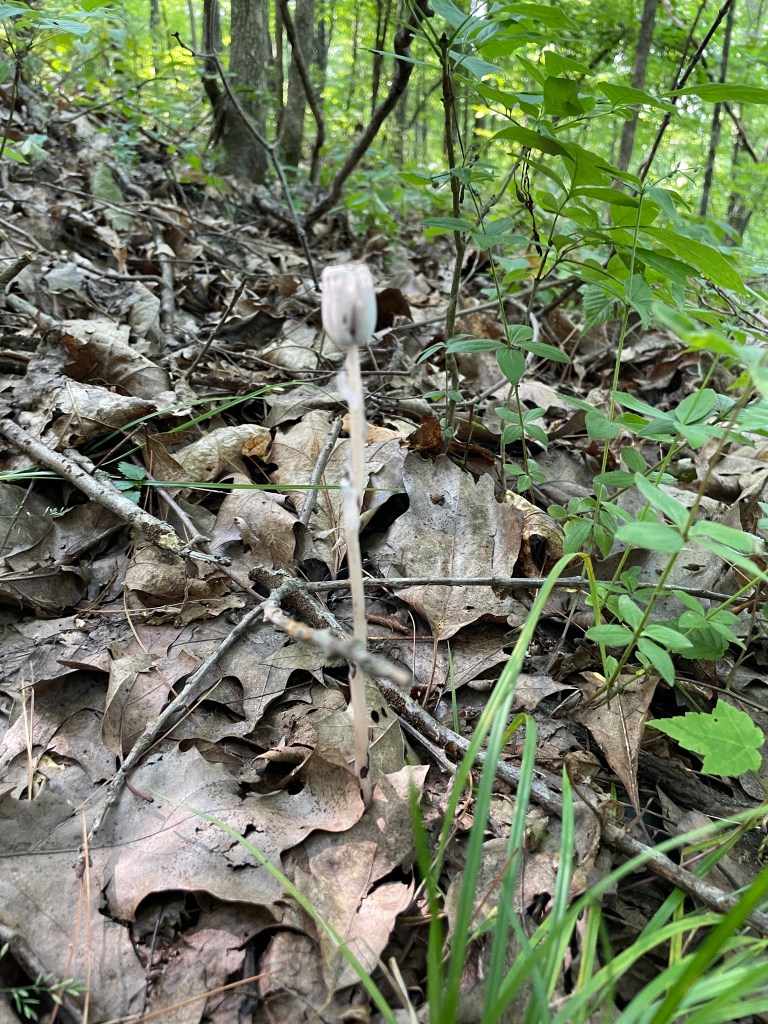
Photographed by Michael W. Brandon 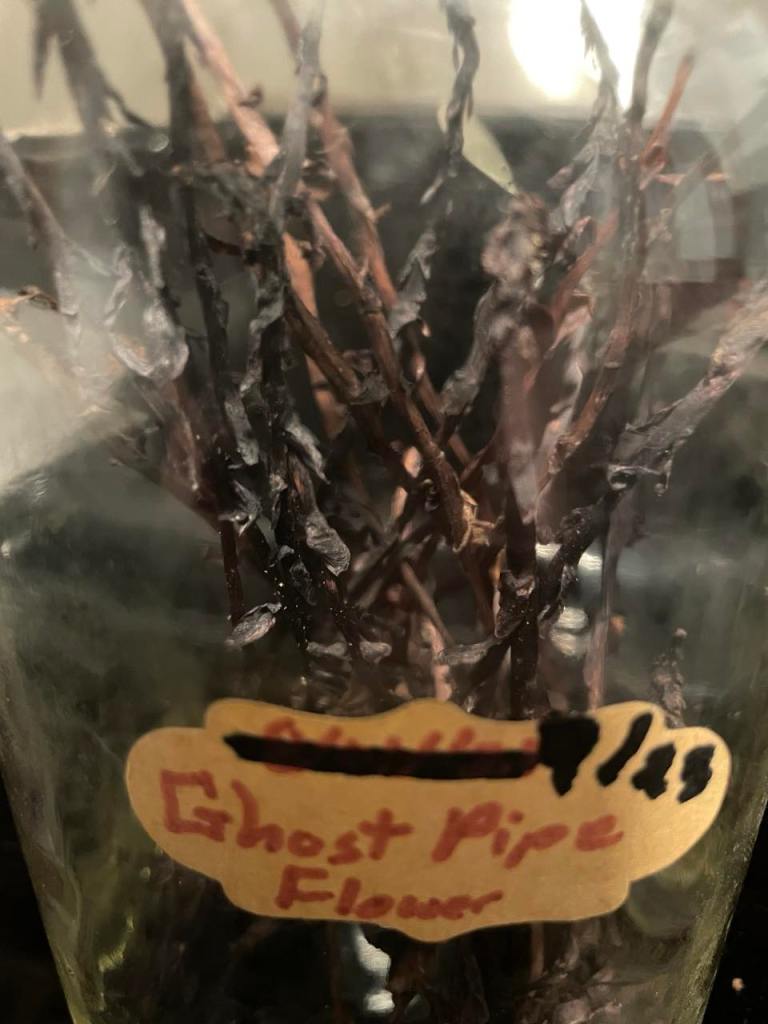
Photographed by Michael W. Brandon 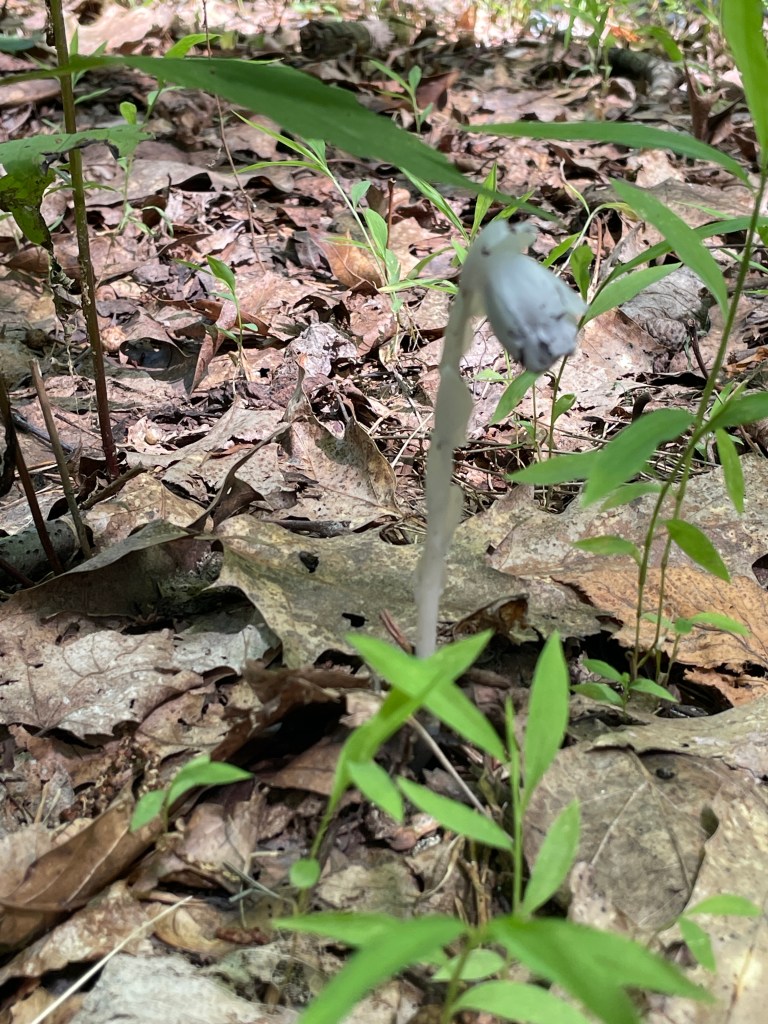
Photographed by Michael W. Brandon
 ArtifactMuse